

An Essay by Shaun McNicholas · PSM Design
From full-stack architecture to iterative intelligence — introducing IteraOS, an operating system built for continuous, human-guided decision-making.

What started as a simple idea—organizing my own life, finances, and projects—quickly turned into something much larger. Not because the problem itself was overly complex, but because I approached it the same way I’ve approached enterprise systems for the past three decades.
I wasn’t interested in building another productivity app. I wanted a system that understands context, learns patterns, and reduces decision fatigue over time. I wanted my information to belong to me—not a cloud-hosted giant vulnerable to data-sharing exposure, compliance risk, and loss of control.
That shift—from tools to systems—is where this stopped being a personal project and started becoming something I now think of as IteraOS: an operating system for iterative intelligence.
I’ve spent the better part of three decades building systems across CRM, analytics, financial platforms, and enterprise infrastructure—and this is the first time I’ve seen the pieces align in a way that fundamentally changes how systems can be designed.
Most modern applications—even the ones labeled “AI-powered”—are still fundamentally reactive.
They store data. They respond to inputs. They automate predefined workflows.
But they don’t learn with you.
They don’t evolve alongside your decision-making process. They don’t internalize how you think.
Some of the major platforms are getting close, but their learning isn’t centered on you, your operating model, or your systems. In many cases, they’re accelerating a pattern that has already been building for years—pushing organizations toward the same language, the same structures, and the same globally recognized defaults.
That works at scale—but it breaks down at the level where real decisions are made.
And most importantly—they don’t close the loop between human judgment and system behavior.
That’s the gap.
See the Alternative ModelWhat I’ve been building is based on a different approach: Iterative Intelligence—where human expertise and automated systems operate in a continuous feedback loop, refining decisions over time.
This isn’t artificial intelligence in the way it’s marketed. It’s a structured collaboration model:
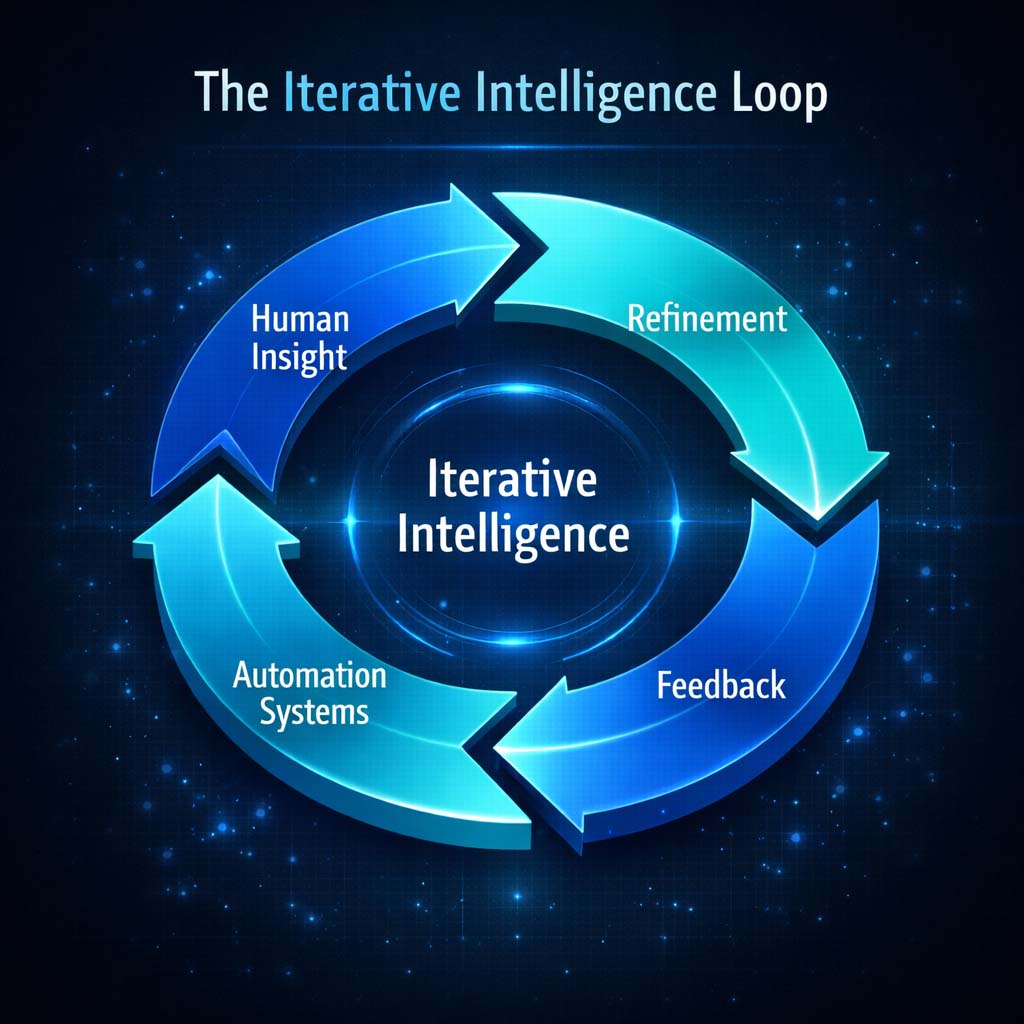
Over time, the system doesn’t just execute tasks—it begins to reflect patterns of decision-making.
That’s where real leverage starts to happen.
See the feedback loop running against real decisions, not slideware.
Request a DemoEven though this started as a personal project, I designed it with the same principles I’ve used in enterprise environments. The architecture is intentional:
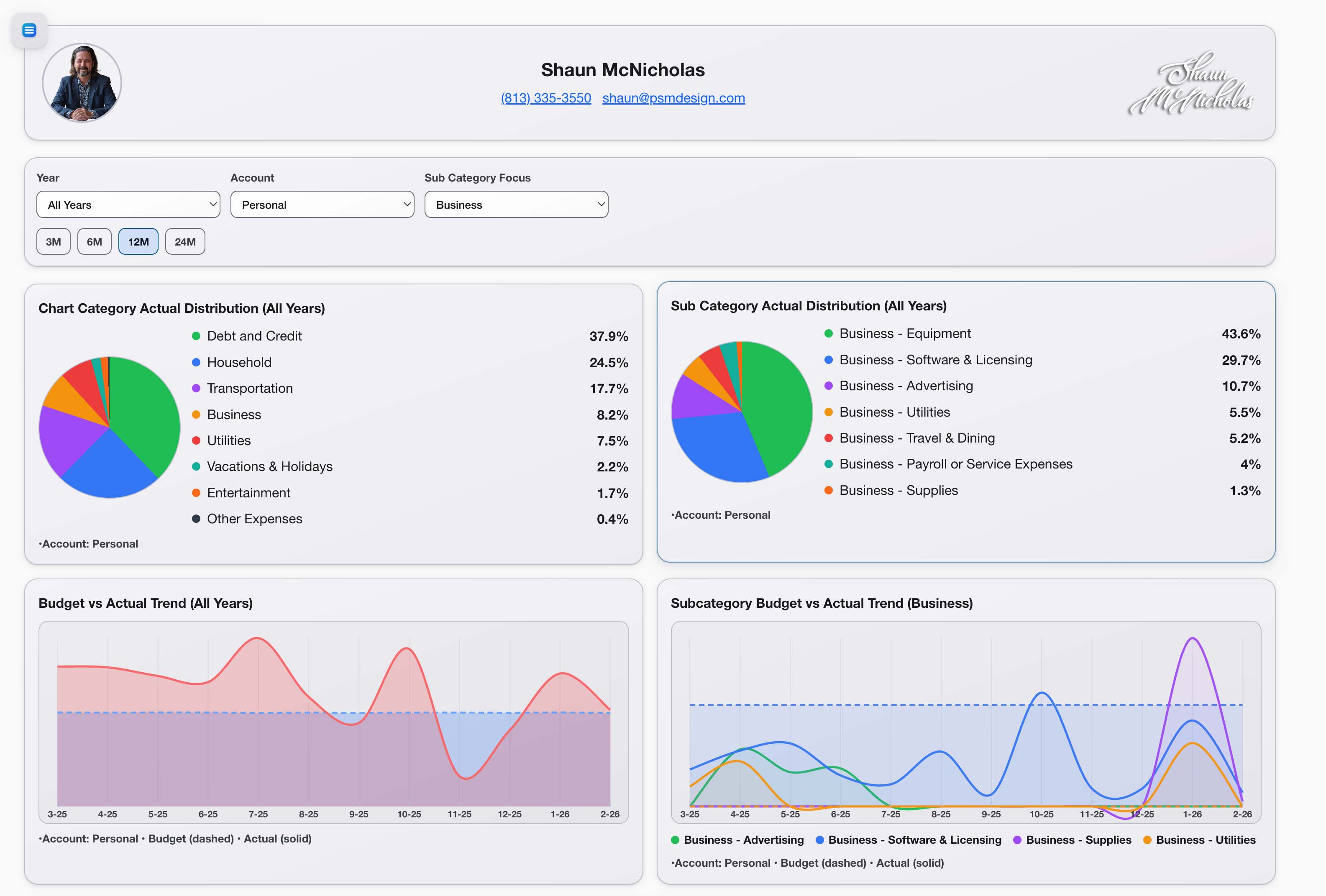
One of the most important decisions: keep the source of truth local—and treat the cloud as an extension, not a dependency.
That single choice reshapes everything:
As systems become more intelligent, the question isn’t just what they can do—but who they are learning for.
Across both enterprise and consumer systems, the biggest gap isn’t technology—it’s context.
We already have:
But the human insight layer—the part that understands what the data should mean—is still disconnected.
That knowledge lives in people’s heads. And today’s systems don’t capture it. They operate adjacent to it.
See the Pattern I’ve Watched for 30 YearsOver the past three decades, I’ve built, customized, and integrated systems across a wide range of environments. Over time, you start to recognize patterns—not just in systems, but in how people interact with them.
And through all of it, one pattern has remained constant:
No off-the-shelf system has ever truly plugged into a real business.
Every organization has its own structure, its own culture, its own way of operating. And success has always required:
The goal was never just efficiency. It was to build systems that:
But there was always a limitation. Even highly customized systems were constrained by the speed of iteration:
Design → Test → Automate → Execute → Repeat
That loop took time. Weeks. Months. Sometimes years. Which meant truly adaptive systems—systems that evolve alongside the business—weren’t practical.
Read the CTO Leadership Case StudyThat limitation is no longer the constraint. The tools available today have compressed that entire cycle.
What used to take months can now happen in days. What used to require teams can now be orchestrated by a single experienced operator.
And more importantly: the gap between idea and implementation has nearly disappeared.
When you combine:
You unlock something new:
Systems that evolve as they are used.
That’s what IteraOS represents.
See IteraOS Close the Loop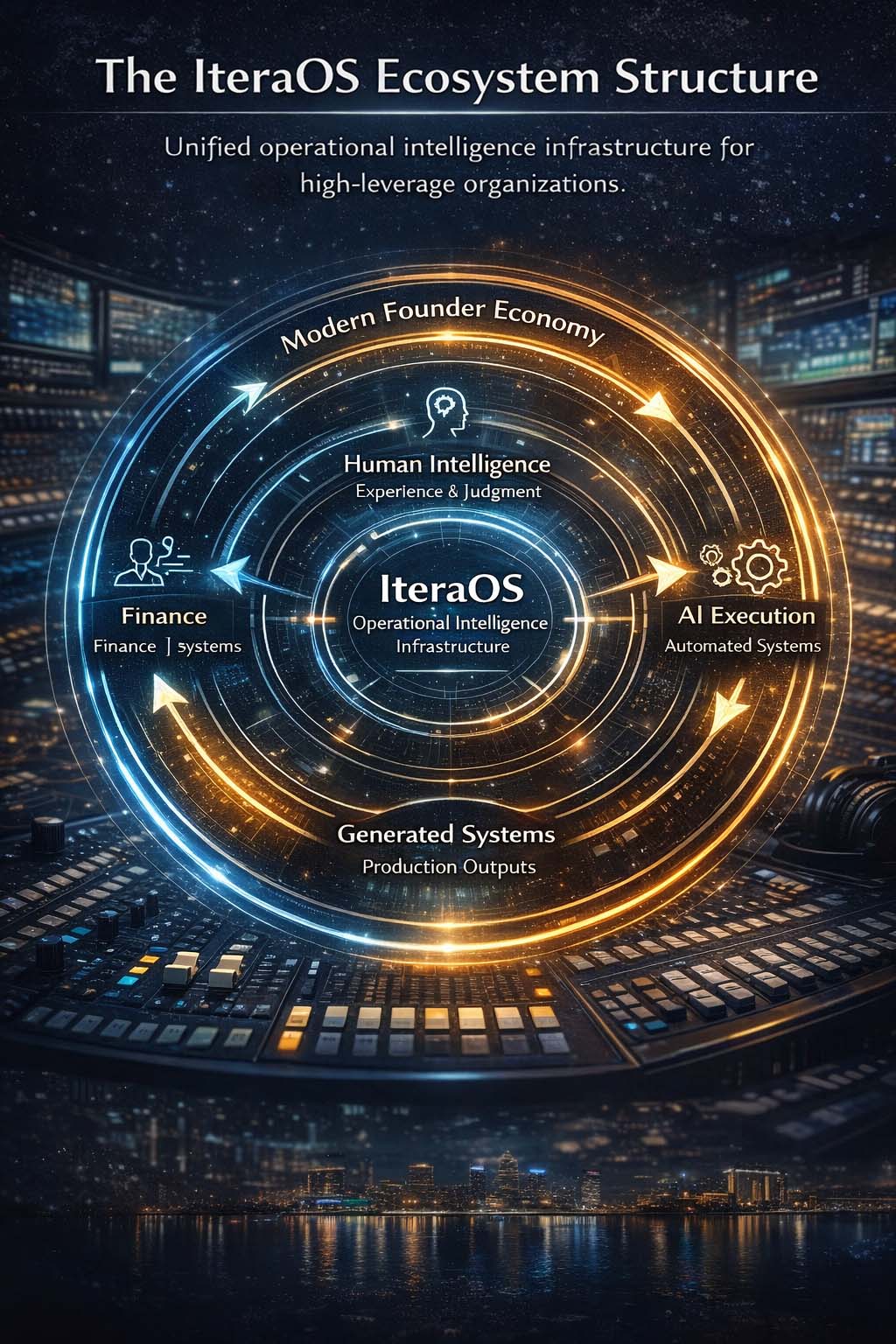
IteraOS is an Iterative Operating System—designed to grow organically alongside the person or organization it supports, continuously shaped by real-world usage, feedback, and human-guided intelligence.
It’s not a fixed application. IteraOS is designed to extend across domains—finance, operations, communication, and decision-making—without losing the context of how those systems actually interact.
It’s not constrained by predefined workflows. It behaves more like a platform—supporting multiple domains while maintaining a continuous feedback loop between human insight and system behavior.
Every interaction contributes to the system:
Over time, the system shifts from managing tasks → to managing decisions.
You make a purchase at Home Depot and receive an emailed receipt.
It doesn’t start from zero. It starts from experience.
We’re entering a phase where building software is no longer the constraint. Code can be generated. Systems can be assembled quickly. Automation is widely accessible.
The real challenge now is:
Most systems today automate tasks. The next generation of systems will evolve decisions.
See Where This Applies Beyond Personal UseWhile this started as a personal platform, the model applies far beyond individual productivity. Anywhere decisions repeat, this approach becomes valuable:
Any environment where patterns exist and context matters can benefit from a system that learns with the people who run it, rather than around them.
Browse More Case StudiesWe’re moving from:
Predefined Automation
Continuous Feedback · Human-Guided Intelligence Loops
That’s the shift. That’s Iterative Intelligence.
And this platform I started for myself is quickly becoming something much larger.
As the cost of building software approaches zero, the value shifts elsewhere. Not in the tools. Not in the code.
That’s where the next generation of systems will be defined. That’s what I’m building toward with IteraOS.
If you’re thinking about how AI, automation, and human expertise should actually work together inside your organization, this is a conversation leadership teams need to be having now—not after systems are already in place.
I work with leadership teams to design systems that move beyond automation into adaptive, human-guided intelligence.
Start the ConversationThe gap between idea and implementation has nearly disappeared. The organizations that win next won’t just automate tasks—they’ll build systems that evolve decisions, guided by the people who understand them best.
PSM Design · Human-guided AI and automation strategy for organizations building intelligent business operating systems.