

Consulting Services · PSM Design LLC
AI is not the hard part anymore. Knowing where to apply it is.
Most organizations experimenting with AI today are struggling with three questions: Where will automation create real value? Which systems should be modernized first? How do we integrate AI without creating operational risk? The purpose of this advisory is to answer those questions.
At PSM Design LLC, our AI & Automation Advisory services help organizations cut through the noise and implement automation in ways that are practical, strategic, and aligned with real business goals. This is not a technology sales pitch — it is a disciplined, human-guided process for deciding where automation belongs in your organization, and where it does not.
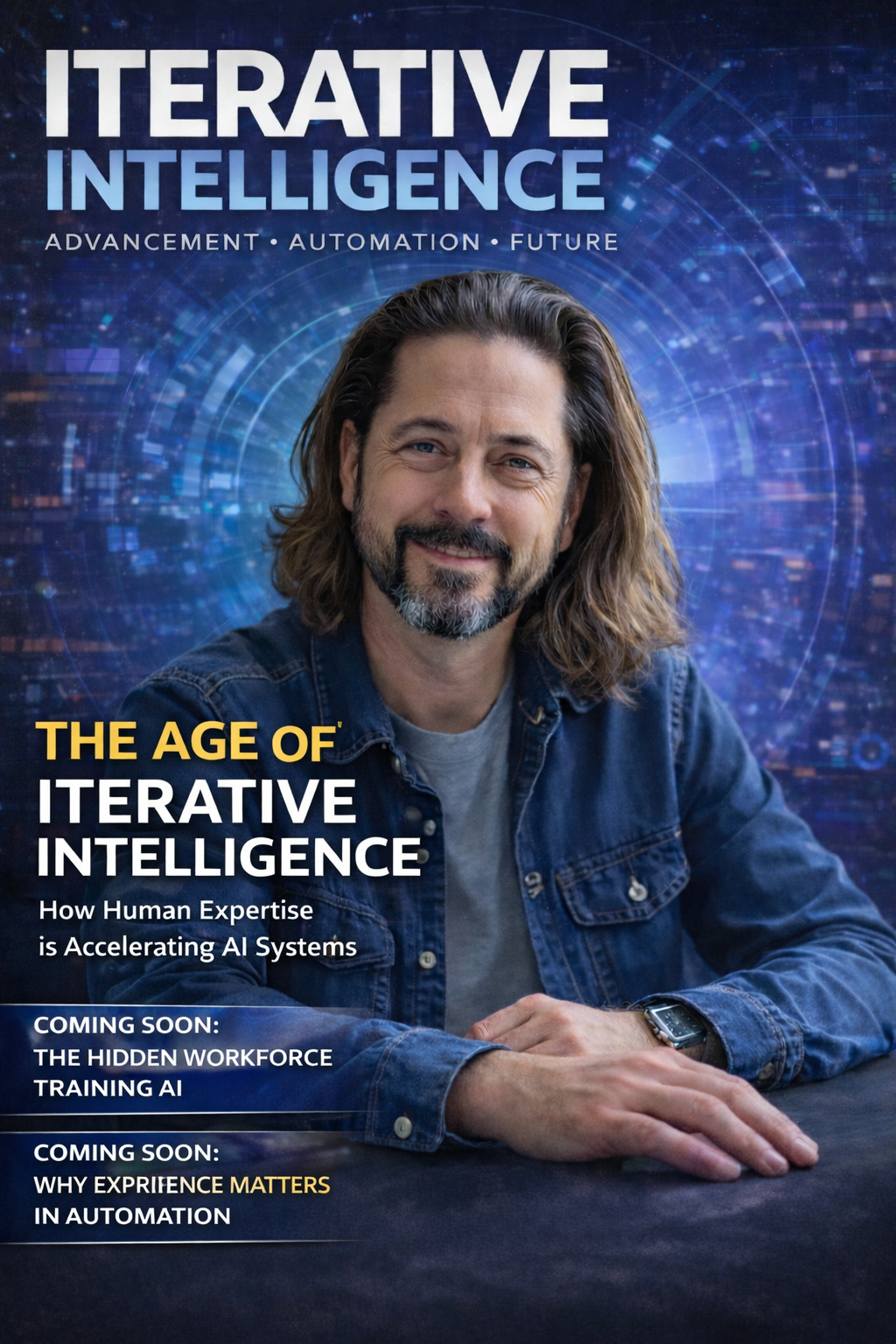
Automation should not replace human expertise. It should amplify it.
Over the past 100 years, organizations built systems designed around human-operated processes — people executing steps, systems recording the results, and management reacting after the fact. Today we are entering a new phase where human expertise and automated systems collaborate in continuous feedback loops. Data informs automation, automation surfaces insight, and human judgment decides what happens next.
This is what I describe as Iterative Intelligence.
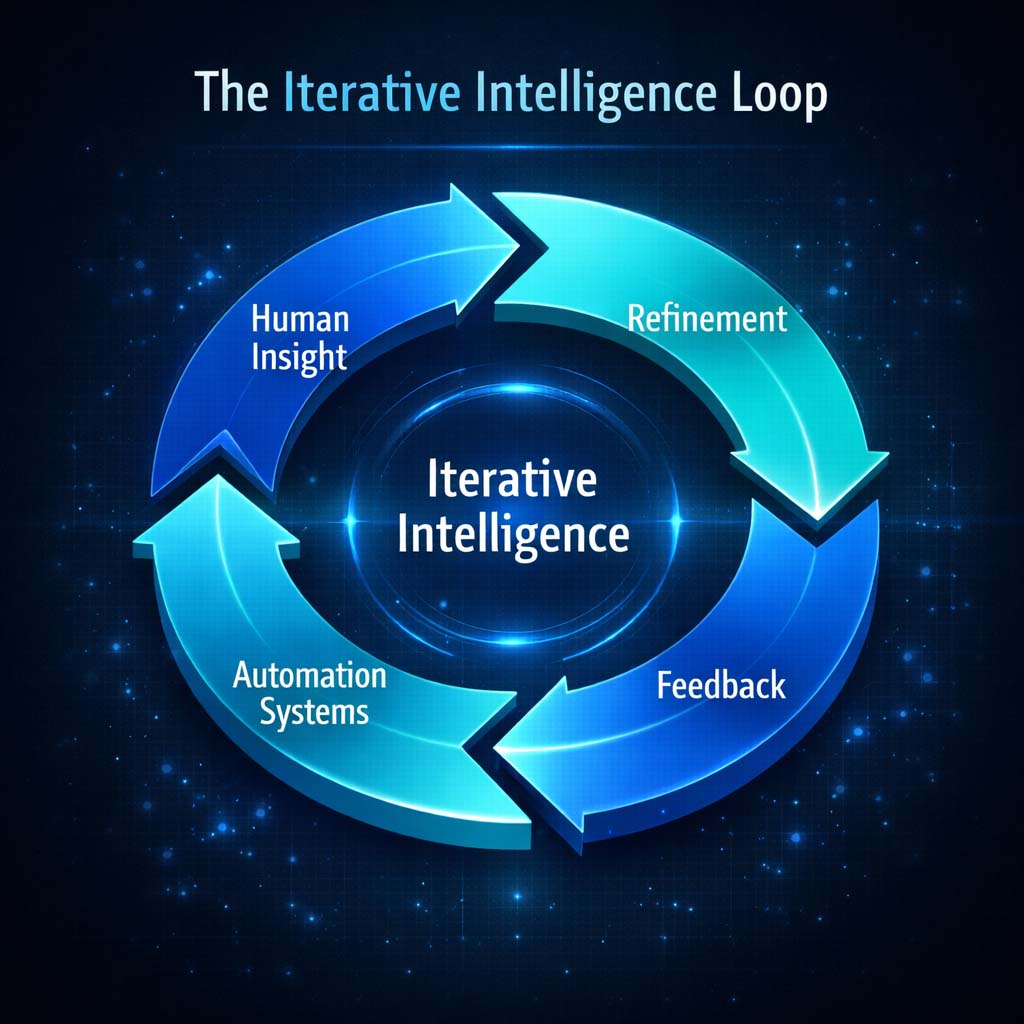
Systems improve through iteration. Automation accelerates insight. Human judgment guides direction. Organizations that understand this shift will move faster than competitors still relying on outdated models — models built for a world where technology waited for people, rather than one where technology and people move together.
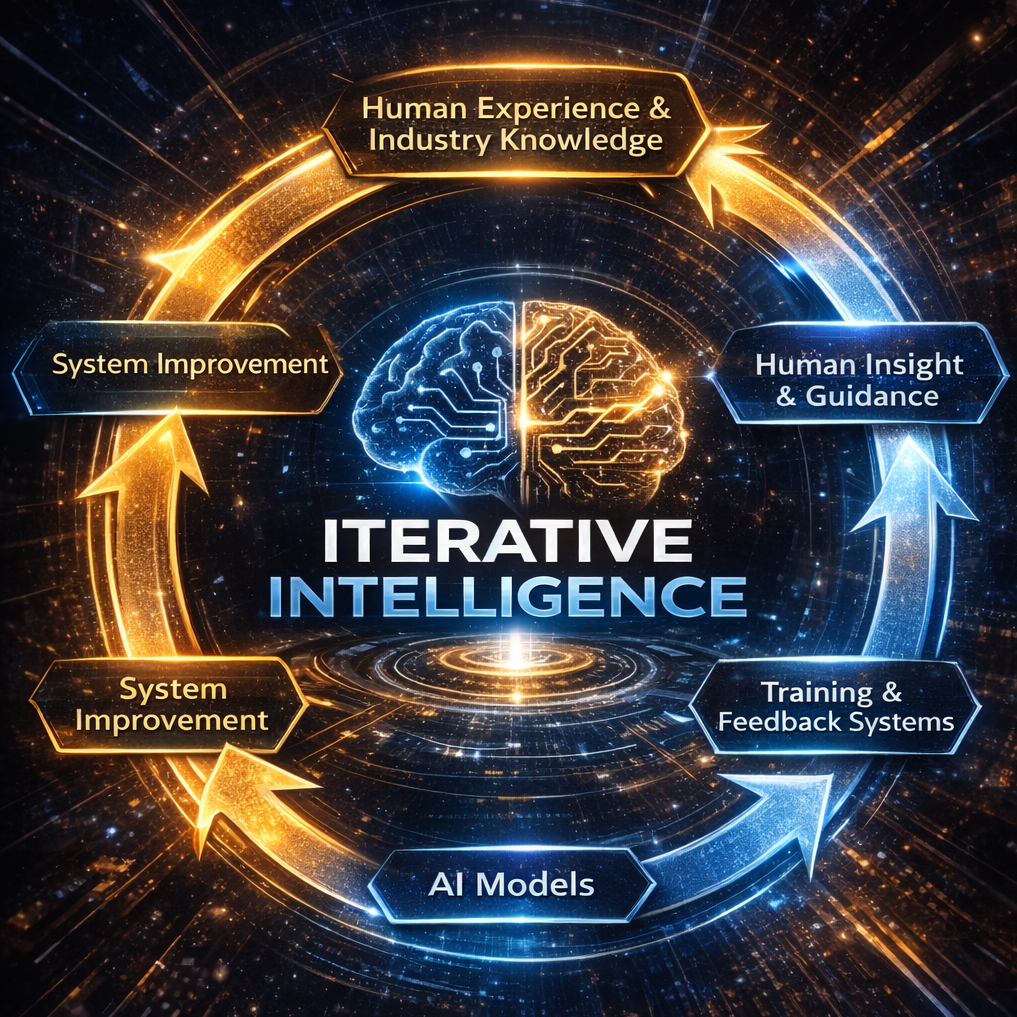
The loop begins with data — the raw signal generated by day-to-day operations. Automation processes that signal faster and more consistently than manual review ever could, surfacing patterns leadership would otherwise miss.
From there, human judgment enters the cycle: interpreting the signal, weighing context automation cannot see, and deciding what action to take. That action feeds new data back into the system, and the loop begins again — a little smarter each time it runs.
This is the architecture behind Iterative Intelligence (IteraOS), and it is the same architecture I bring into every advisory engagement: not a one-time automation project, but an operating system that keeps improving.
See How This Applies To YouAcross industries I see the same challenges emerging, regardless of sector, size, or maturity:
Most organizations are not lacking tools. They are lacking a coherent framework for applying them.
My advisory work helps organizations evaluate their current technology environment and identify practical ways automation can create measurable impact — not by adding more software, but by clarifying how the systems already in place should work together, and where new automation genuinely earns its place.
Get a Clear FrameworkEach engagement is designed to meet leadership teams where they are — from an initial strategic conversation to a full automation architecture and implementation roadmap.
A focused consultation designed for leadership teams evaluating how automation and AI should fit into their long-term strategy.
A structured evaluation of an organization's systems, workflows, and technology stack.
Starting at $10,000
Request This AssessmentA deeper engagement focused on designing an automation architecture aligned with the organization's operational goals.

This service is designed for:
If any of these describe your organization right now, the conversation is worth having before another budget cycle passes without a clear plan.
See If This Fits Your OrganizationFor more than two decades I have worked at the intersection of technology architecture, data systems, and business strategy.
My work has included:
Unlike many advisory firms that focus on theory, my perspective is grounded in building and operating real systems at scale — the kind of systems leadership teams depend on every day, not proof-of-concept demos. That distinction matters when the recommendation you receive has to survive contact with a real operating environment.
Read the Case Studies

Start with the questions this advisory is built to answer — where automation will create real value, which systems should be modernized first, and how integration can happen without creating operational risk. Starting with a framework, rather than a tool, is what separates strategic AI adoption from experimentation driven by hype.
The processes generating the most fragmented data, the most manual review, or the clearest feedback loop opportunity are usually the right starting point. A Digital Transformation Assessment maps these opportunities across your entire technology stack before any recommendation is made.
Risk typically enters through disconnected tools, unclear governance, and legacy systems never designed for automation in the first place. Addressing governance and system architecture together — rather than automating around the problem — is central to how this advisory approaches every engagement.
Teams need clarity on how automation fits into their work, not just training on new tools. That clarity comes from leadership communicating a coherent framework — the same framework this advisory helps organizations build — so automation feels like amplification of expertise rather than a threat to it.
Organizations that succeed in the coming decade will not simply adopt AI tools.
They will build systems where human creativity and automated intelligence work together in iterative cycles. If your organization is exploring how to navigate this transition, I would welcome the conversation.